LONDON · RESIDENTIAL PROPERTY
Roofing & Building Envelope Systems in London
Protecting your property from the outside in.
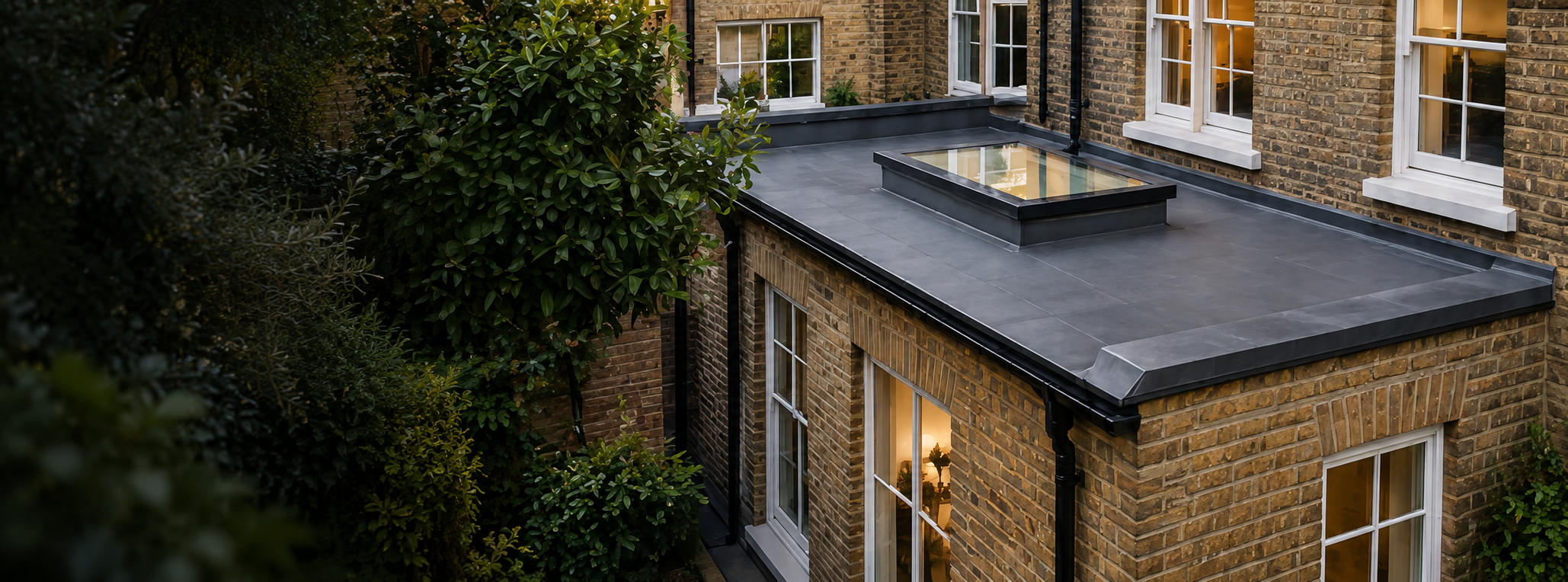
A building’s protection against water depends on more than its roof covering. External walls, flashings, openings and rainwater drainage all contribute to keeping the construction beneath them protected.
The Flush Royale carries out roofing, waterproofing and external remedial works across London. From recurring leaks and localised defects to flat roof replacement, we plan the work around the condition of your property and the findings of our assessment.
Please include photographs of the affected areas when completing our enquiry form.
Roofing & Waterproofing
Targeted roof repairs, flat roof renewal and replacement of defective waterproofing. The scope may include the supporting deck, damaged timber and associated detailing where inspection shows that these require attention.
A COMPLETE BUILDING ENVELOPE
One Building. Connected Protection.
The building envelope is the outer fabric of your property: its roof, external walls, windows, doors and the junctions between them.
Our work focuses on investigating and repairing defects in these elements, particularly where deterioration or poor detailing allows water to enter. We consider how adjoining surfaces and drainage arrangements affect the proposed repair.
External Walls
& Weatherproofing
Localised repairs to damaged render, mortar joints and external finishes, with preparation and materials selected to suit the existing construction. We assess the condition beneath visible damage where further access is necessary.
Flashings, Junctions & Openings
Assessment and repair of vulnerable connections around roof abutments, parapets, rooflights and window or door openings. We look at how water is directed across and away from these details.
Gutters & Rainwater Drainage
Repairs and alterations to gutters, outlets and downpipes where leaks, blockages or unsuitable arrangements contribute to water ingress. Drainage is considered alongside the roof and adjoining external surfaces.
A DIAGNOSIS-LED APPROACH
Find the Cause Before Defining the Repair
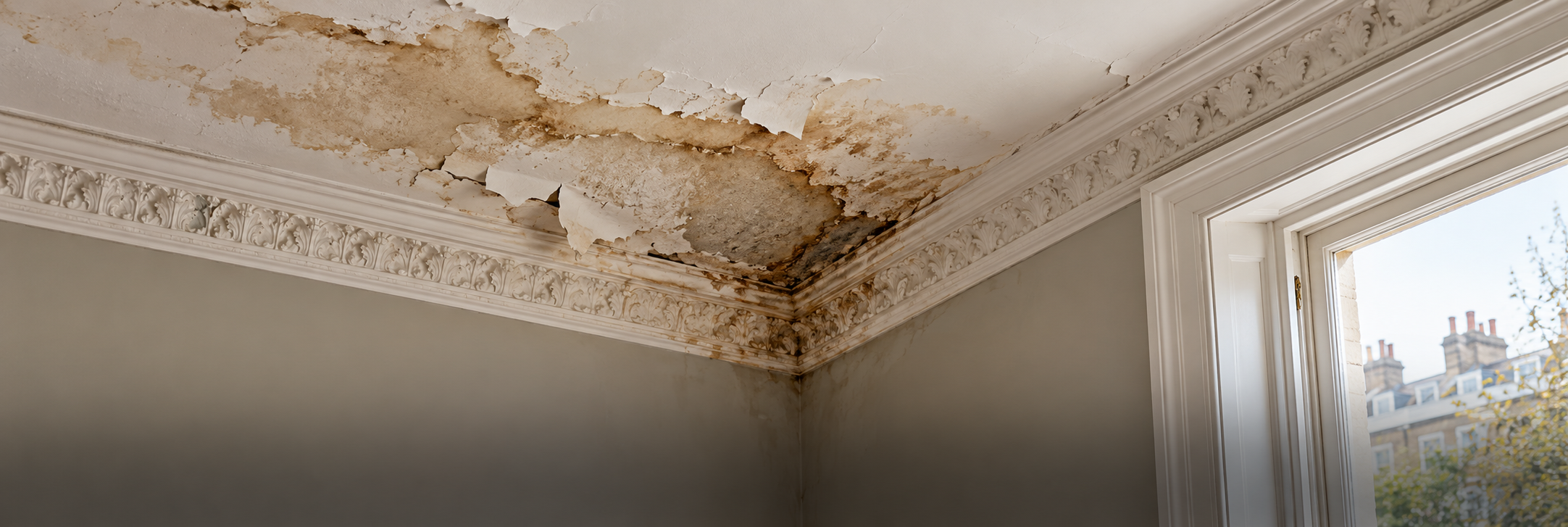
A ceiling stain does not always identify the point where water entered the building. Water may travel through concealed construction before becoming visible indoors.
We begin by reviewing the reported problem, its history and any relationship with rainfall. We then inspect accessible areas and identify whether further access, testing or opening-up works are required.
Depending on the property and agreed scope, the assessment may include:
The condition of accessible roof coverings and waterproofing.
Visible seams, laps, flashings, edges and junctions.
Roof falls, outlets, gutters and downpipe arrangements.
Signs of deterioration in accessible decking or timber.
External wall finishes and details around openings.
Internal evidence of water ingress, with moisture readings where useful.
Where a defect cannot be confirmed from the available access, we explain what remains uncertain before recommending further investigation.
CONTINUITY MATTERS.
The Details That Keep Water Out
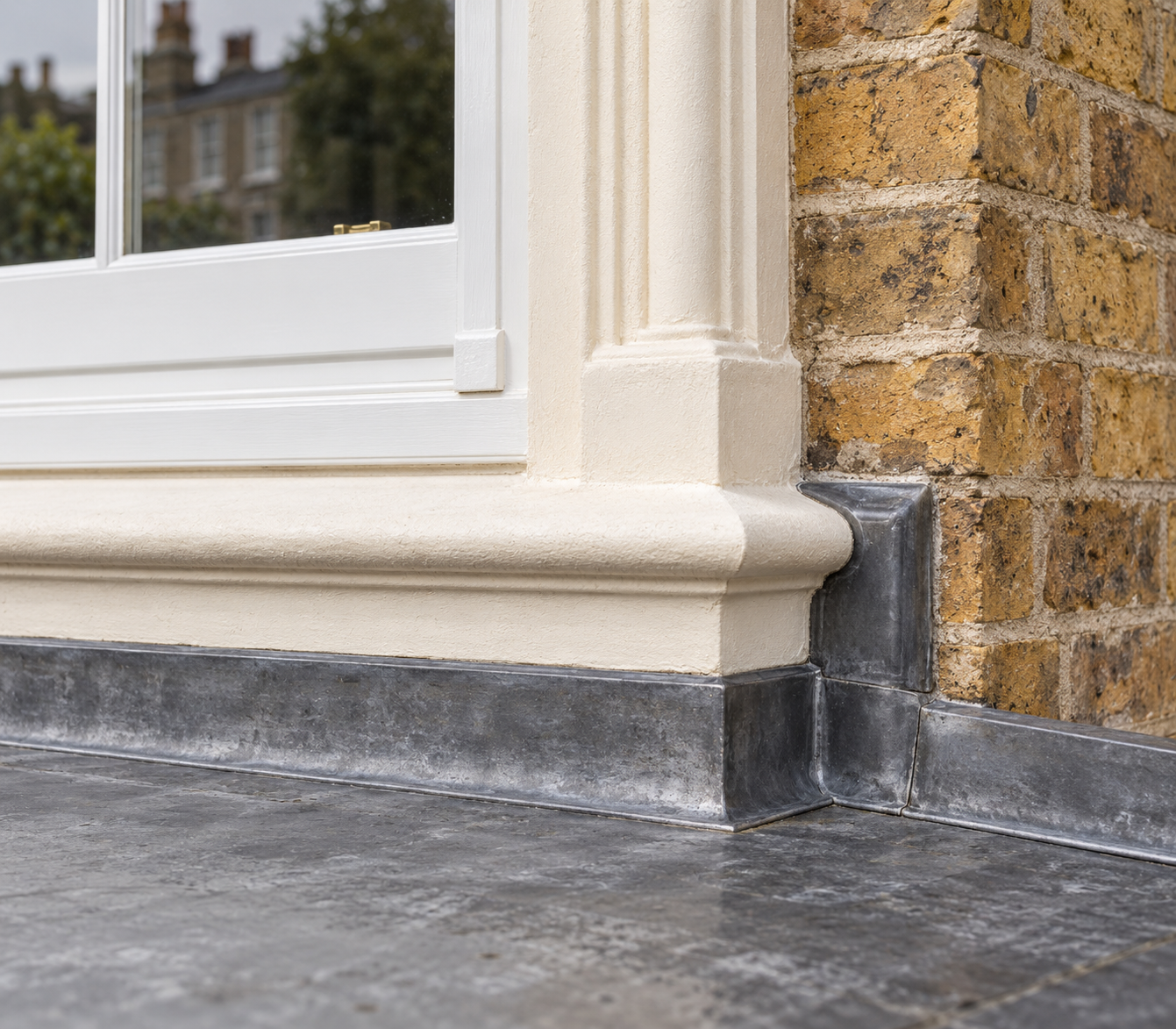
Roof-to-Wall Connections
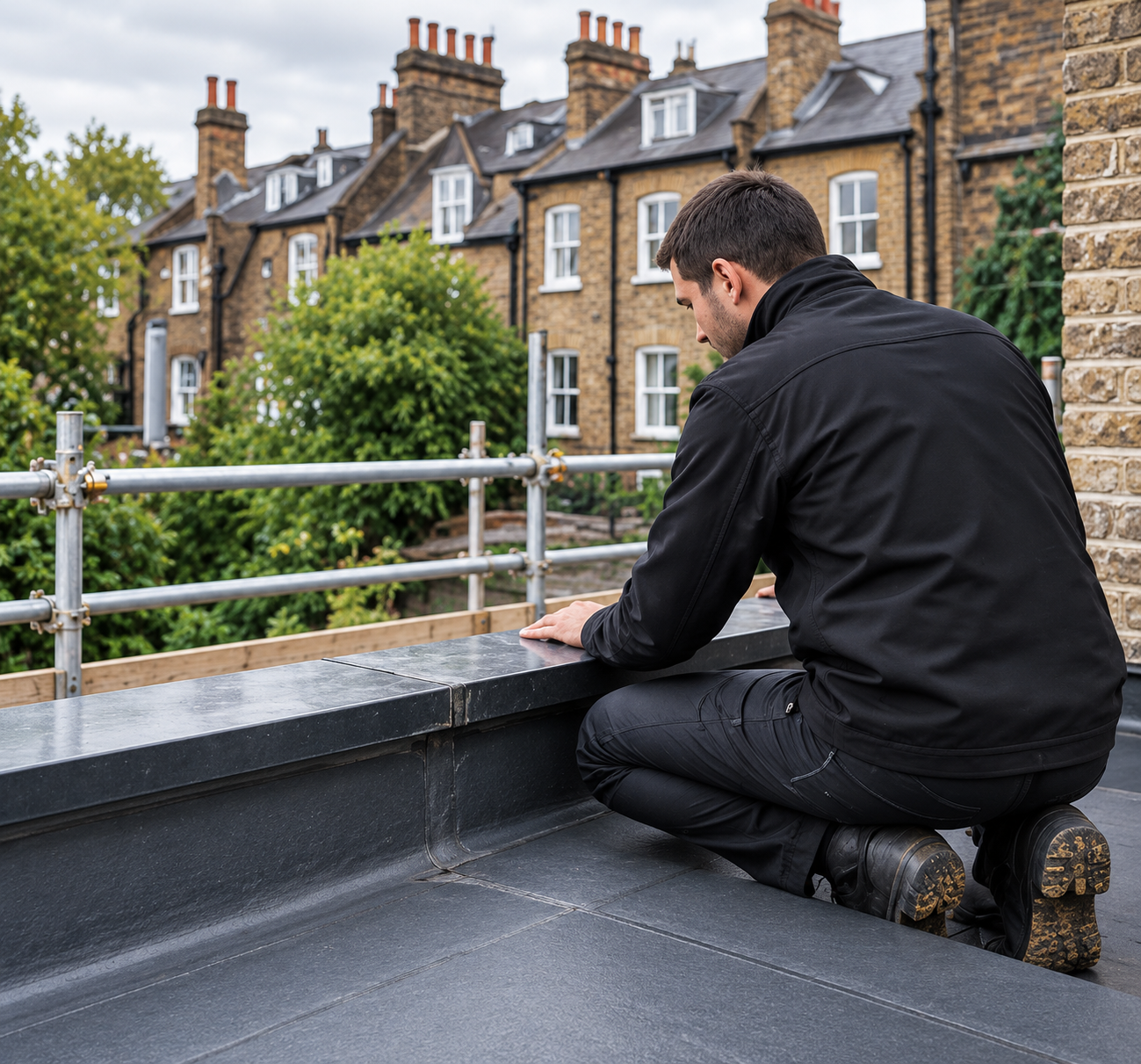
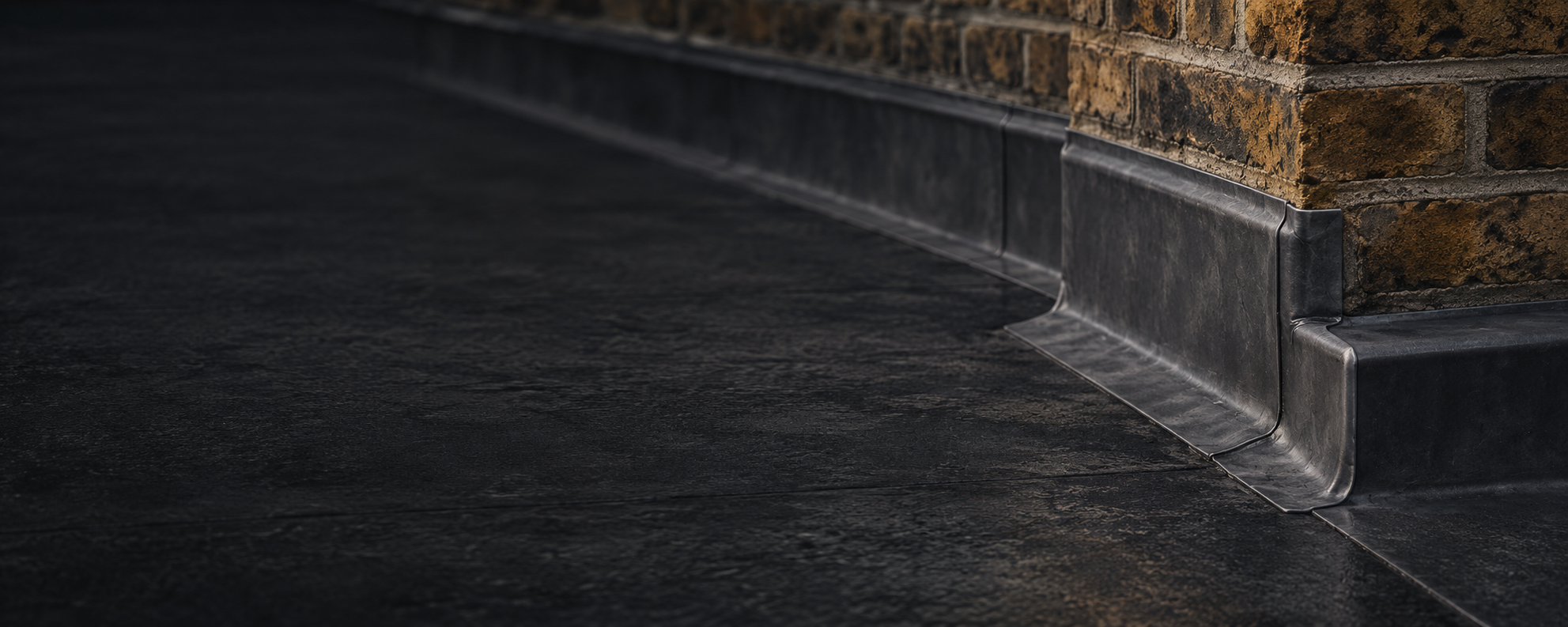
The junction between a roof and an adjoining wall needs a suitable arrangement of upstands, flashings and terminations. We assess these connections as part of the repair scope, including the condition of the supporting surfaces.
Edges, Parapets & Copings
Exposed edges and parapets can allow water into the construction when coverings, joints or protective details deteriorate. Repairs may involve the waterproofing, coping arrangement, adjoining masonry or a combination of these elements.
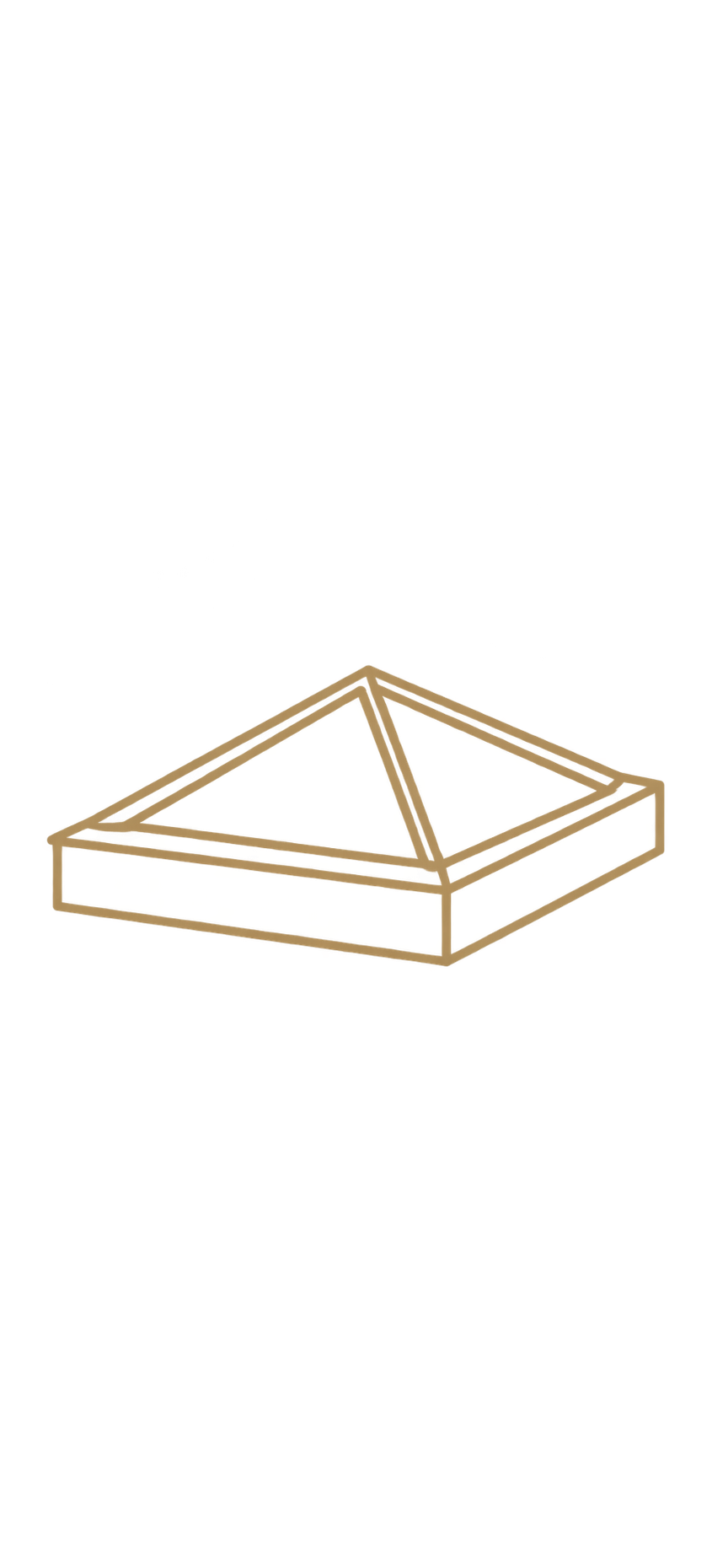
Rooflights & Penetrations
Rooflights, vents and service penetrations interrupt the main roof surface. We examine their surrounding details and specify repairs appropriate to the opening and the selected waterproofing system.

Falls, Outlets & Gutters
Water needs a clear route off the roof and into the rainwater drainage system. We consider the condition and arrangement of falls, outlets and gutters when defining the work.
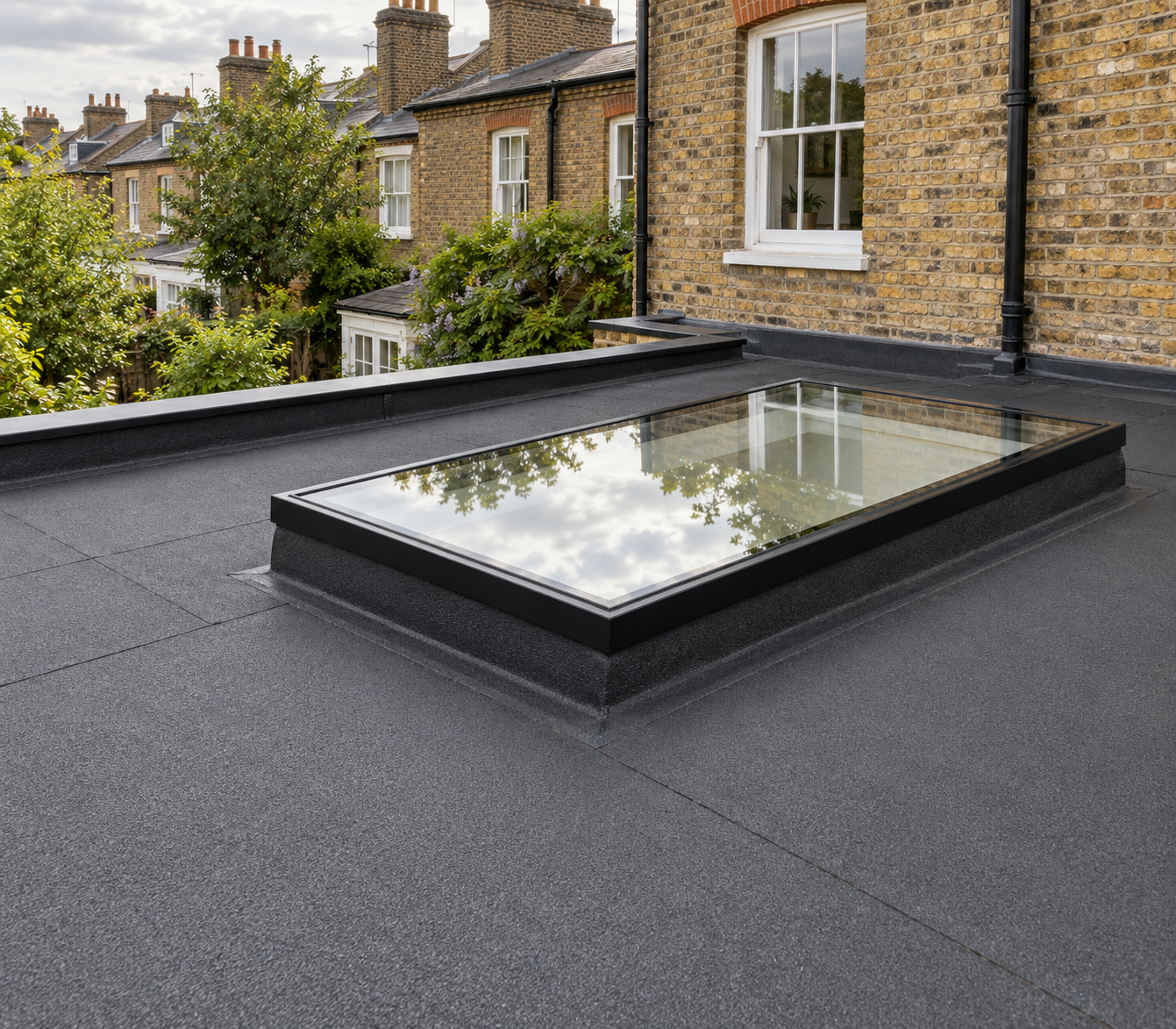
FLAT ROOFS DONE PROPERLY
Roof Repairs & Flat Roof Replacement
A localised defect may be suitable for a targeted repair where the surrounding roof remains serviceable and the repair can be made compatible with the existing materials.
More extensive work may be appropriate where the covering has deteriorated across a wider area, leaks recur in several locations or the supporting construction is damaged.
Where replacement is proposed, the scope can include removal of the existing covering, inspection of the deck, agreed repairs to affected materials and installation of the specified waterproofing system.
Insulation, ventilation and moisture-control requirements are considered where relevant to the proposed roof build-up. Any additional design input or approvals needed for the work are identified during planning.
Our quotation explains what is included, the proposed materials and any assumptions about concealed conditions. Additional findings following removal are documented and discussed before the scope is extended.
MORE THAN JUST A ROOF
External Repairs That Support the Whole Building
Cracked render, deteriorated mortar joints, defective perimeter details and leaking rainwater goods can contribute to water entering walls and adjoining interiors.
Depending on the findings, external remedial works may include:
Removal and repair of loose or damaged render.
Localised masonry and mortar-joint repairs.
Preparation and reinstatement of suitable protective finishes.
Repairs to weatherproofing details around windows and doors.
Associated flashing, gutter and downpipe works.
Materials are selected with the existing building fabric in mind. Where deterioration suggests movement or a wider structural concern, further assessment may be needed before making good.
For period properties, we also consider how proposed repairs relate to existing architectural details and finishes.
A CLEAR AND STRUCTURED PROCESS
From Assessment to Completion
01 Assess
Review the reported problem, inspect
accessible areas and identify any further investigation or access needed.
02 Specify
Prepare a defined scope and quotation
covering the proposed repairs, materials,
access arrangements and relevant
exclusions.
03 Repair
Carry out the agreed work with appropriate preparation, protection and sequencing. Communicate additional findings as
concealed areas become accessible.
04 Check
Review the completed work and relevant details, carry out checks appropriate to the scope and explain any follow-up requirements.
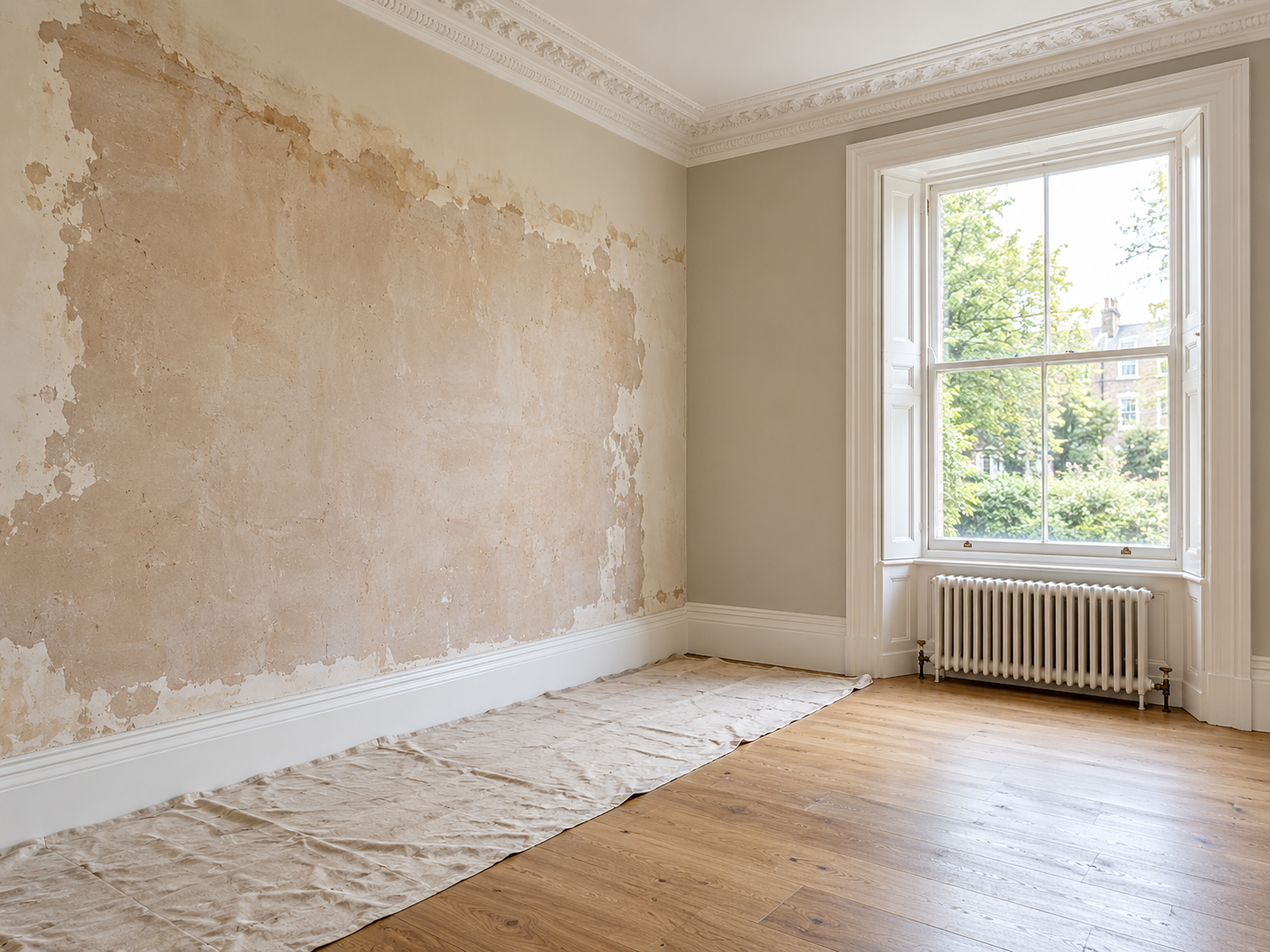
RESTORING MORE THAN SURFACES
From External Repair to Internal Reinstatement
Roof and external-envelope failures can damage ceilings, wall linings, insulation, timber and interior finishes.
Where required, we can coordinate the external repair with the subsequent internal works. This may include removal of damaged materials, drying arrangements, substrate repairs, plastering and decoration.
The sequence is planned around addressing the source of ingress and assessing the condition of affected materials before reinstatement proceeds.
For projects requiring a more detailed investigation or contractor documentation of the resulting damage, please see our Water Damage Investigation service.
COMMON QUESTIONS
Frequently Asked Questions
-
That depends on the extent of the defects and the condition of the surrounding roof. A targeted repair may be appropriate for an isolated problem. Wider deterioration, repeated failures or damage beneath the covering may justify more extensive work. We explain the basis for our recommendation following assessment.
-
The building envelope includes the roof, external walls, windows, doors and their connections. Our service focuses on roofing, waterproofing and external remedial repairs within an agreed scope. The assessment identifies which elements need attention and whether specialist input is required.
-
Yes. We review the history of the leak and inspect accessible roof, drainage and external details. Some investigations require specialist access, testing or controlled opening-up works. These requirements are discussed before proceeding.
-
Please provide the property address, a description of the problem, when it occurs and details of any previous repairs. Include internal photographs and external views taken safely from ground level or an accessible window. Please do not climb onto the roof to take photographs.
-
We can assess and quote for associated external repairs, such as damaged render, mortar joints, perimeter weatherproofing and adjoining flashings. If the window or door itself requires replacement or specialist repair, we identify that separately.
-
Access depends on the height, location and scope of the work. Scaffolding, edge protection or other access equipment may be required. The proposed arrangements and associated costs are clarified during quotation.
-
Yes. We can quote for internal remedial works associated with water ingress, including damaged wall and ceiling finishes. Reinstatement is sequenced around the external repair and the condition of the affected construction.
LET’S LOOK AT YOUR PROPERTY
Tell Us Where the Problem Starts
Whether you are dealing with recurring roof leaks, deteriorating external finishes or planning a flat roof renewal, we can help define the next step.
Share details and photographs through our enquiry form so we can review the problem and discuss the appropriate assessment.